
|
Eager Space | Videos by Alpha | Videos by Date | All Video Text | Support | Community | About |
|---|

Welcome to Eager Space
I decided to do this video to provide an answer to a specific question.
Why would anybody give spinlaunch $150 million?
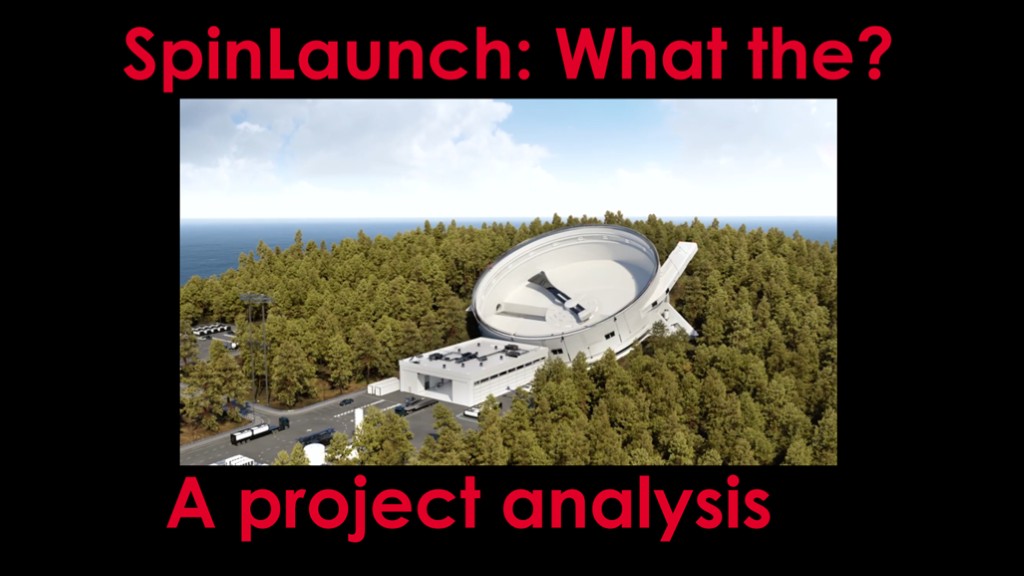
If you want my detailed analysis of SpinLaunch, you can watch this video.
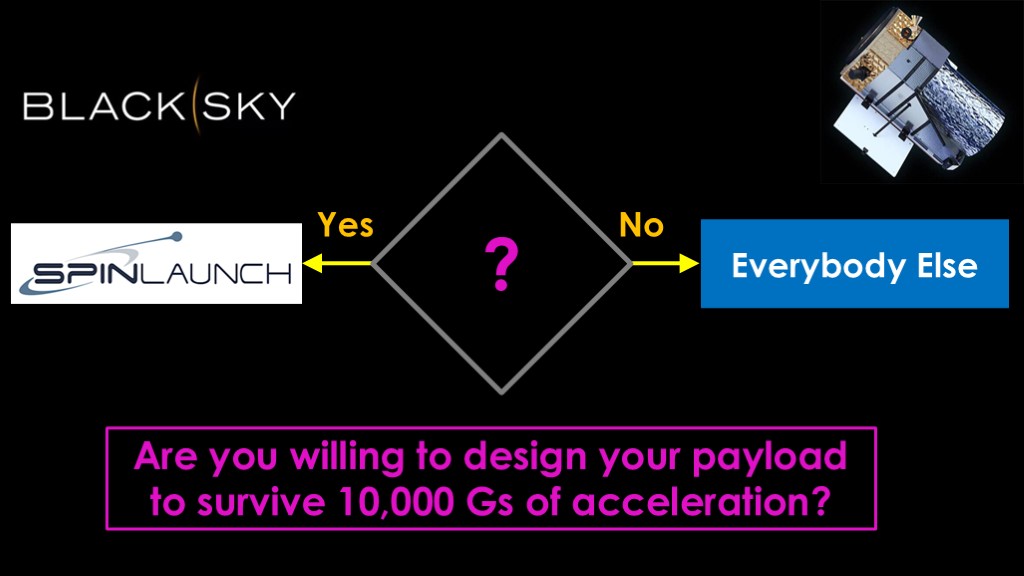
The big problem with the approach is pretty simple...
Let's say you are a small company like black sky and you are looking for a launch provider for your earth observation satellites.
You'll need to ask yourself a simple question.
Are you willing to design your payload to survive 10,000 Gs of acceleration?
If the answer is yes, then you can consider launching on SpinLaunch. If the answer is no, then you are stuck with launching on all the other launch providers.
The problem is that I can't see any world in which a satellite company would answer yes to that question. Doing that design work is going to cost time and money, and will likely result in a satellite that is both more expensive and less capable. And it's not part of the expertise that you want to develop in your company.
If you do decide to take on that design work, it's only useful if and when spinlaunch gets their system up and running.
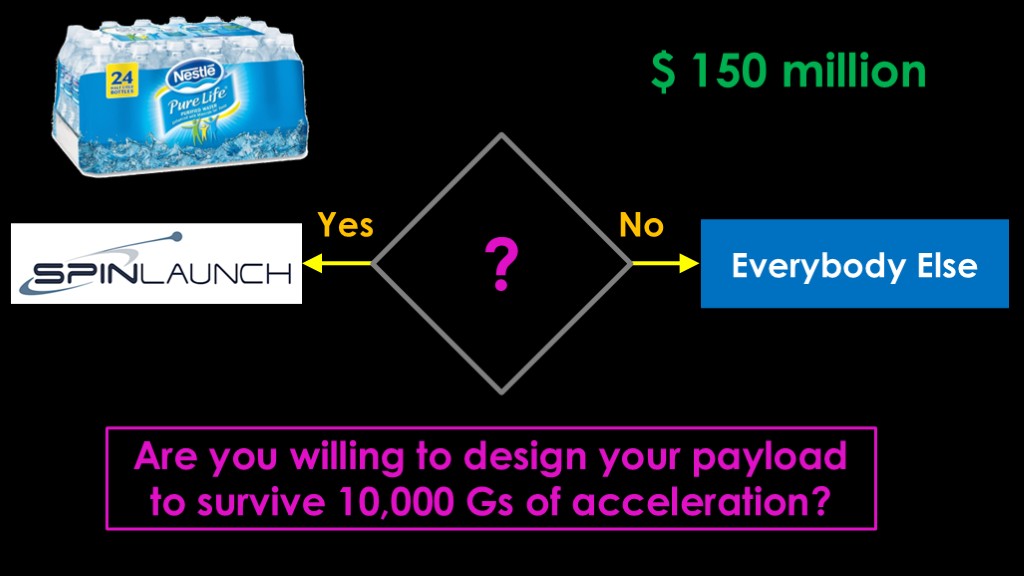
Maybe there's a world someday where you could launch commodities like water using a technology like spinlaunch, but there's no market right now.
I don't think I have a particularly unique analysis ability - there were lots of people who doubted the viability of spinlaunch.
But venture capital funds still gave them $ 150 million.
To explain how that happened, we'll need to talk a bit about venture capital.
Venture capital is a weird world, weird enough that I'm going to do a separate video on it.
For now, there are two contradictory things you need to know.
The first is that venture capital fund invests in companies that have a high chance of failure. They therefore diversify by investing in a lot of companies, at least 10 up to perhaps 30 different investments. The goal is to invest in enough companies that some of your investments will do very well, enough to make the overall investment worthwhile.
The second is that they claim to be uniquely qualified to identify promising companies and help them become successful.
The fund prospectus will say things like
(read)
The prospectus for a given VC fund both tell you how great they are and how risky investing in their fund is.
What they don't tell you is that Venture capital is a market in the economic sense.
But it's a little weird in market terms.
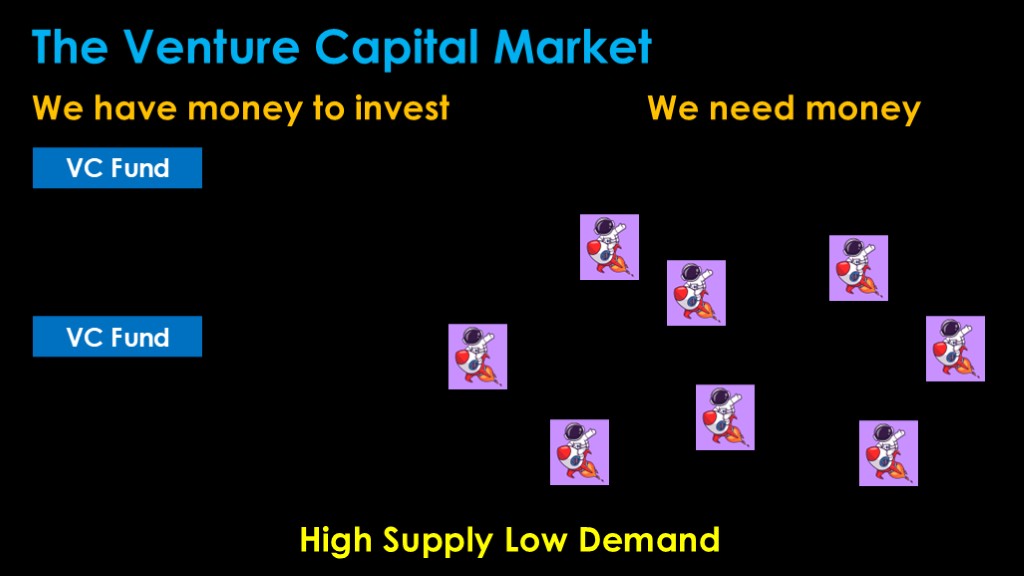
The sellers are the companies that are trying to raise capital. They need money, and they are willing to sell partial control in their company - equity ownership in investment terms - in return for that money.
The buyers are the venture capital funds. They look through all the companies that have ideas and choose the best ones.
This is a high supply low demand market condition. The VC funds can be very selective in who they choose to invest in, and they will only invest in the ones that they think are the best.
This is historically one of the problems for space companies - even good startups couldn't get the money that they needed to be successful.
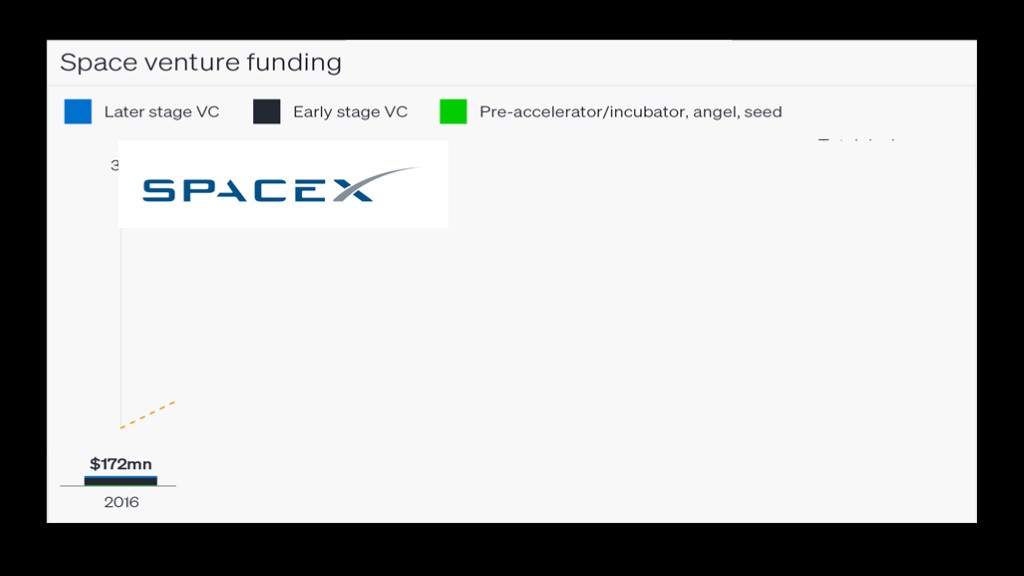
If we look at 2016, there was only $172 million in VC capital invested in space. The VC investors didn't find it very attractive.
But about that time a company that you might have heard of showed up and showed a lot of potential.
More investors wanted to make money and more aerospace VC funds got started.
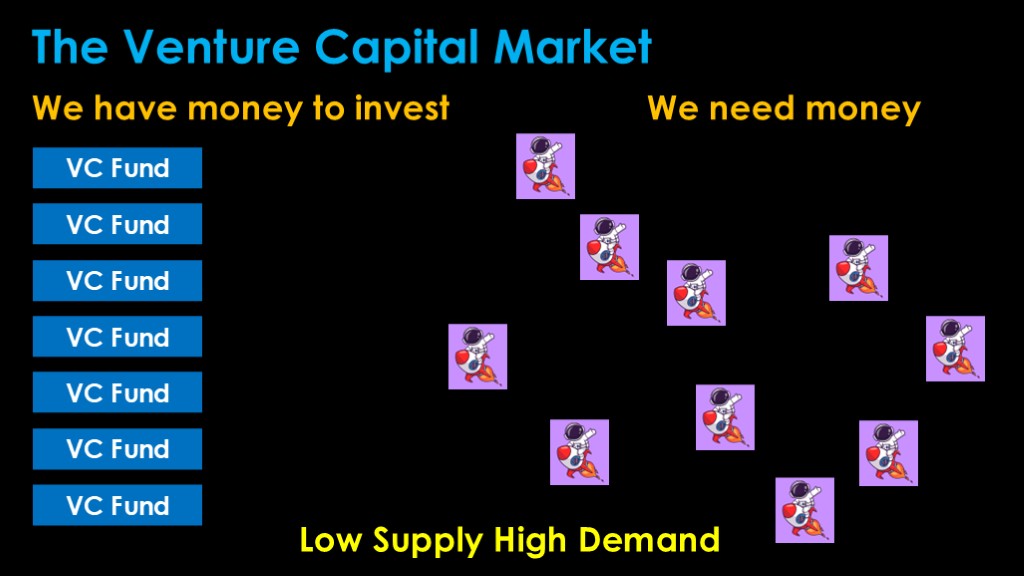
Many more funds pop up and there is a lot more money looking for a place to invest.
Maybe a few new good prospects crop up, but the number of companies is fairly static.
That puts us in a low supply high demand market condition.
There are many more fund managers competing for the limited supply.
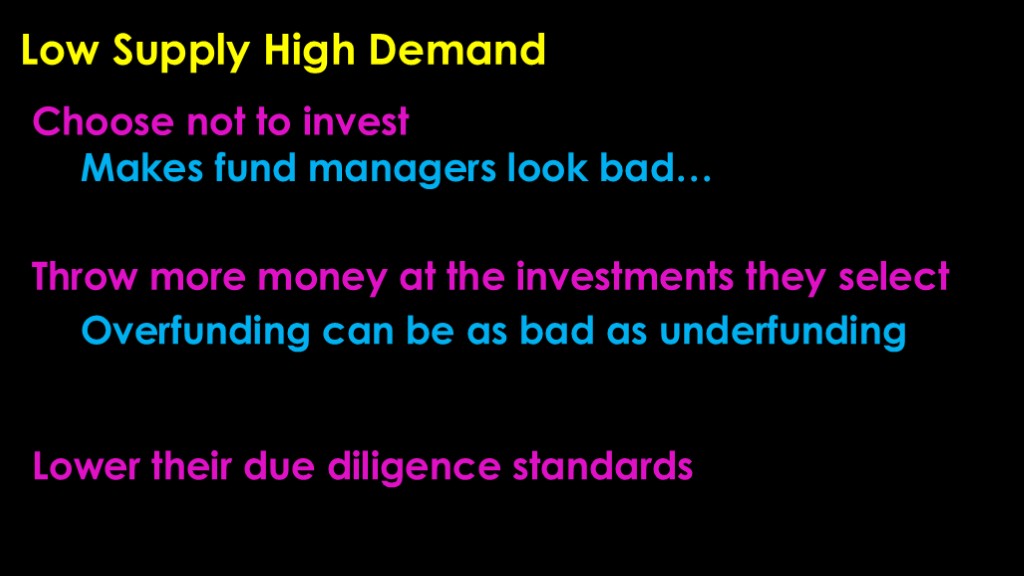
There are only 3 options for the funds.
They could choose not to invest. I won't go into the details here, but for most targeted funds it looks really bad to tout how great you are at choosing investments and not actually choose investments.
The second option is to throw more money at the companies they do select. This is fairly common because it's simple for the funds to do and the fund investors have no idea how much money is appropriate. But overfunding a company can be as bad as underfunding - they may waste money rather than deploying it effectively.
The third option is to lower their due diligence review standards. There simply aren't enough great prospects out there, and that forces you to choose not-so-great prospects.
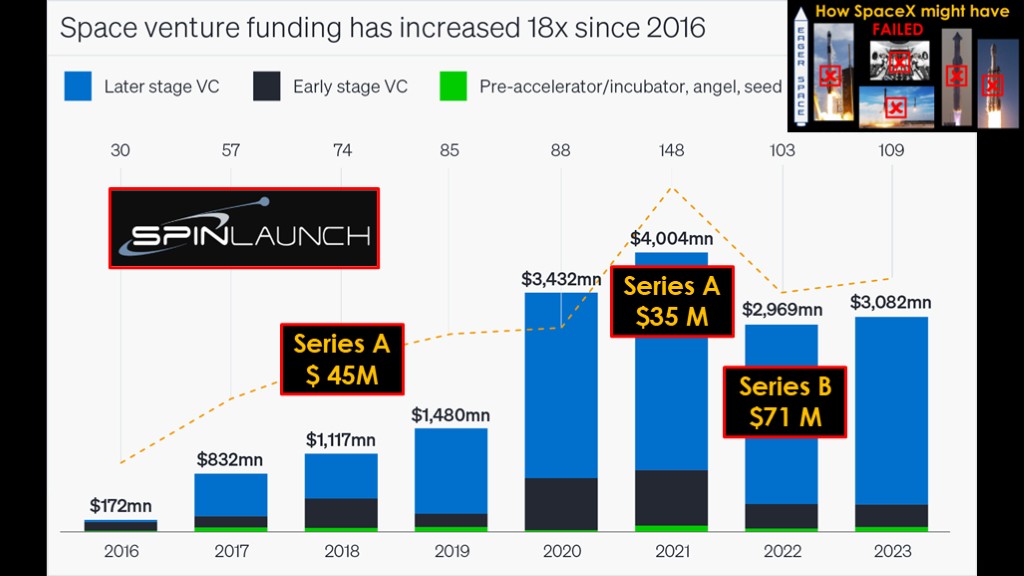
If we look at the time period when Falcon 9 was starting to fly a lot, we see a *lot* of new money compared to 2016. 6 times the investment in 2018, and over 20 times the investment by 2020.
If we overlay the investments in spinlaunch on this chart, we see that the company had very good timing, looking for money when there are lots of funds looking to make investments.
The value of timing is often overlooked. In my video "how spacex might have failed" I discuss the multiple places where SpaceX not only had the right plan but was in the right place at the right time.
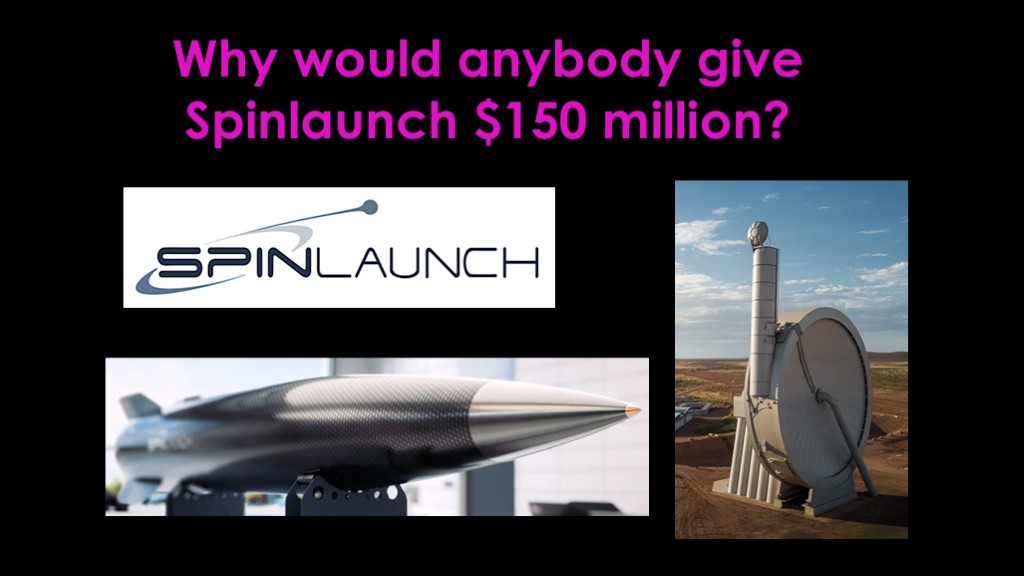
And that is the answer to our question. Spinlaunch was able to raise $150 million in funding because there were more funds looking to invest than great places to invest.
That's all for this video.
Today's song David Bowie's "Fame" off the 1974 album Young Americans
https://www.youtube.com/watch?v=Ypgq0qdgVZA